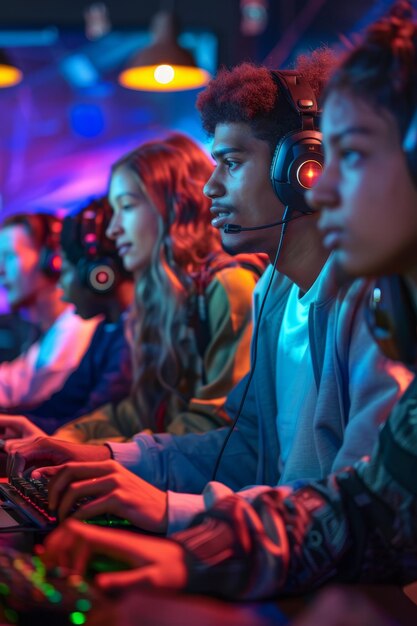
In an era where screens dominate our daily lives, one might ponder: what does gaming truly mean to our youth? Is it merely a pastime, or does it serve a more profound role in shaping identities, forging connections, and honing skills? While often dismissed as a frivolous activity, gaming can offer a myriad of benefits and challenges that stretch far beyond the pixels on a screen. This exploration delves deep into the multifaceted impact of gaming on today’s youth, examining both its advantageous implications and the potential pitfalls it presents.
1. The Social Fabric of Gaming
At its most basic level, gaming provides a unique social platform. Many youth engage in cooperative gameplay, fostering camaraderie and solidarity. Through multiplayer experiences, individuals from diverse backgrounds unite, transcending geographical boundaries. A pivotal question emerges: does this virtual connectivity compensate for the tangible human interactions that youth are often encouraged to cultivate?
These digital realms allow for the exchange of ideas and experiences, often leading to lasting friendships. Gamers share strategies, mourn losses, and celebrate victories together, creating an intricate web of emotional support. However, the challenge lies in discerning whether these online relationships are as fulfilling as face-to-face interactions. Are virtual friendships the same as true companionship? The dilemma invites contemplation on the nature of engagement in today’s technologically advanced society.
2. Skill Development: More than Just Hand-Eye Coordination
Gaming has evolved into a sophisticated arena for skill enhancement. Many youth discover that video games require more than just reflexes; they cultivate critical thinking, problem-solving, and strategic planning. Fast-paced games demand nimble decision-making, often translating these skills into real-world applications. Moreover, some genres, like simulation games, enable players to master complex systems, simulating scenarios that mirror real-life challenges.
Yet, a significant challenge persists: striking a balance between gaming and other forms of learning. How can young gamers exploit these skills while ensuring their academic pursuits remain a priority? The potential for distraction is omnipresent, leaving parents and guardians to ponder the fine line between beneficial engagement and detrimental obsession.
3. The Development of Identity
In the vast universe of gaming, players often assume new roles, stepping into the shoes of heroes, warriors, or even everyday characters. This escapism provides a canvas upon which youth can explore various facets of their identities. It offers a safe space for experimentation, where they can see the consequences of choices without real-world repercussions.
However, this fluid exploration can pose challenges as well. With so many personas at their fingertips, do young individuals risk becoming disconnected from their true selves? Are they crafting identities through the lens of curated avatars rather than genuine self-expression? This thematic nuance begs further investigation into the psychological impacts of traversing these digital landscapes.
4. The Crossroads of Mental Health and Gaming
Games can act as an outlet for stress relief and emotional regulation. For many youth, the immersive nature of gaming offers an escape from daily pressures. Engaging in imaginative worlds can provide solace, alleviating feelings of anxiety and depression. Moreover, the structured objectives in games can foster a sense of accomplishment, further enhancing mental well-being.
Yet, with the beauty of gaming comes an inherent risk. The potential for addiction looms large, especially when gaming becomes the primary coping mechanism. At what point does a harmless hobby spiral into a detrimental obsession? The duality of gaming as a therapeutic tool and a potential vice invites scrutiny and dialogue among mental health professionals, parents, and, most importantly, the youth themselves.
5. Fostering Creativity and Innovation
The realm of gaming is not solely about competition; it often serves as a breeding ground for creativity. From storytelling in role-playing games to world-building in sandbox environments, the imaginative potential is boundless. Youth can invent narratives, craft unique characters, and design intricate landscapes, effectively honing their creative muscles.
However, this creative freedom can present its own challenges. As digital landscapes become increasingly complex, the temptation to rely on established patterns or templates can stifle originality. Are young gamers developing authentic creative skills, or are they simply regurgitating familiar ideas? This question prompts a deeper examination of the skills that gaming seeks to foster versus those that may inadvertently be sidelined.
6. Cultivating Responsibility
While gaming is often interpreted as a chaotic escape, it can also imbue players with a sense of responsibility. Many games require players to manage resources, build teams, and make choices that affect other characters or players. This dynamic can usher in an understanding of cause and effect, teaching youth the importance of accountability.
Conversely, this sense of responsibility can sometimes be overshadowed by impulsivity. As young gamers navigate virtual worlds, do they always consider the repercussions of their actions? The juxtaposition of responsibility and risk-taking inherent in gaming calls for introspection and guidance from mentors, educators, and peers alike.
Conclusion: A Measured Perspective
In contemplating what gaming means to youth, it is essential to embrace a balanced viewpoint. Gaming brings a wealth of opportunities for social interaction, personal growth, and skill development, yet it also presents intricate challenges worthy of consideration. As we move forward, fostering an environment that maximizes gaming’s benefits while mitigating its drawbacks will be crucial. Open dialogues among young gamers, their guardians, and educators can pave the way for a future where gaming is both an engaging hobby and a catalyst for holistic development. Ultimately, the question may shift from “what does gaming mean?” to “how can we shape gaming to mean the best for our youth?”