In today’s fast-paced business environment, where the only constant is change, a crucial question emerges: Can a leader truly inspire, motivate, and connect with their team without a high level of emotional intelligence (EI)? If the answer is no, then how can one elevate their leadership to new heights? The modern workplace is rife with complexities and challenges that extend far beyond the mere execution of tasks; it demands an empathetic approach to leadership. In this exploration, we will delve into the multifaceted importance of emotional intelligence in business leadership.
Understanding Emotional Intelligence
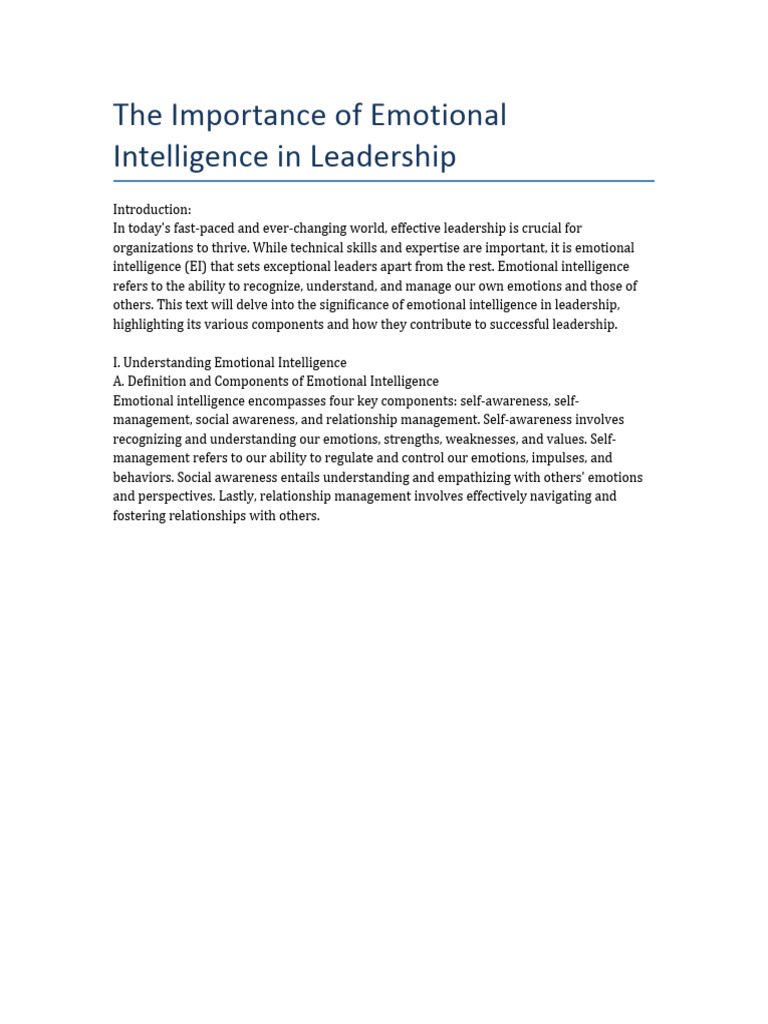
Emotional intelligence, often referred to as EI, is the ability to recognize, understand, and manage our emotions as well as the emotions of others. It encompasses several core components: self-awareness, self-regulation, motivation, empathy, and social skills. Leaders who hone these abilities can create an atmosphere where collaboration thrives, and innovative ideas blossom. But how does EI translate into tangible business outcomes?
Enhancing Communication
Effective communication is the cornerstone of any successful organization. Leaders with high emotional intelligence are adept at conveying their thoughts and feelings in a clear and constructive manner. They can also interpret non-verbal cues, such as body language and tone of voice, which enhances their ability to connect with team members. The result? Fewer misunderstandings, a more cohesive atmosphere, and an enhanced capability for dialogue.
Fostering Team Collaboration
In a workplace that thrives on collaboration, leaders with emotional intelligence cultivate an environment of trust and respect. By understanding the emotions and motivations of their team members, they can foster a sense of belonging and camaraderie. Such leaders create opportunities for collaboration, enabling diverse groups to combine their strengths to tackle complex challenges. This synergy often yields innovative solutions that significantly benefit the organization.
Navigating Conflict Resolution
Conflict is an inevitable aspect of any workplace. Leaders equipped with emotional intelligence can approach disputes with a level of calmness and objectivity. Their ability to empathize allows them to understand various perspectives, making it easier to mediate and facilitate discussions aimed at resolution. By managing conflict effectively, emotionally intelligent leaders support a healthy workplace culture, where employees feel valued and understood.
Boosting Employee Morale and Satisfaction
A leader’s impact on employee morale cannot be overstated. Those who embody emotional intelligence recognize the significance of acknowledging team achievements and offering constructive feedback. When employees feel recognized and appreciated, they are more likely to exhibit higher levels of engagement and commitment to their work. This elevated morale can lead not only to improved productivity but also to lower turnover rates—an essential aspect of a thriving business.
Promoting Adaptability and Resilience
The business landscape is continuously evolving, often in unpredictable ways. Leaders with emotional intelligence exhibit adaptability and resilience, which serve as vital traits in navigating change. They instill a sense of stability amid uncertainty and encourage their teams to embrace new challenges rather than resist them. This agility allows organizations to pivot when necessary, ensuring they remain competitive and innovative.
Driving Organizational Culture
An emotionally intelligent leader plays a pivotal role in shaping the organizational culture. They set the tone by modeling behaviors of respect, integrity, and compassion. As these qualities permeate the workplace, they create a positive culture that prioritizes emotional well-being. This culturally cohesive environment fosters loyalty, attracts top talent, and enhances the company’s reputation.
Harnessing Self-Awareness
Self-awareness is the foundation of emotional intelligence. Leaders who engage in regular self-reflection can better understand their strengths and weaknesses, as well as the impact of their behaviors on others. With increased self-awareness, leaders can modify their approaches and reactions, leading to more effective interactions with their teams. This mindful approach fosters a culture of transparency and authenticity, which is increasingly appreciated in modern workplaces.
Enhancing Decision-Making
Business decisions are often influenced by a myriad of factors, not just cold hard data. An emotionally intelligent leader weighs emotional aspects alongside analytical components, creating well-rounded, impactful decisions. By integrating empathy and insight into their decision-making processes, they are more likely to consider the potential implications for their team and the overall organizational environment. This holistic approach can lead to better outcomes for both the business and its employees.
Conclusion: The Challenge of Cultivating EI
As beneficial as emotional intelligence is, cultivating it is no walk in the park. It requires dedication, self-assessment, and a willingness to grow. Therefore, a playful question arises: Are you prepared to embark on this challenging yet rewarding journey towards enhancing your emotional intelligence as a leader? Ultimately, the integration of emotional intelligence into business leadership is not only essential for individual leaders but becomes a catalyst for creating dynamic, resilient organizations capable of thriving in an ever-changing world.