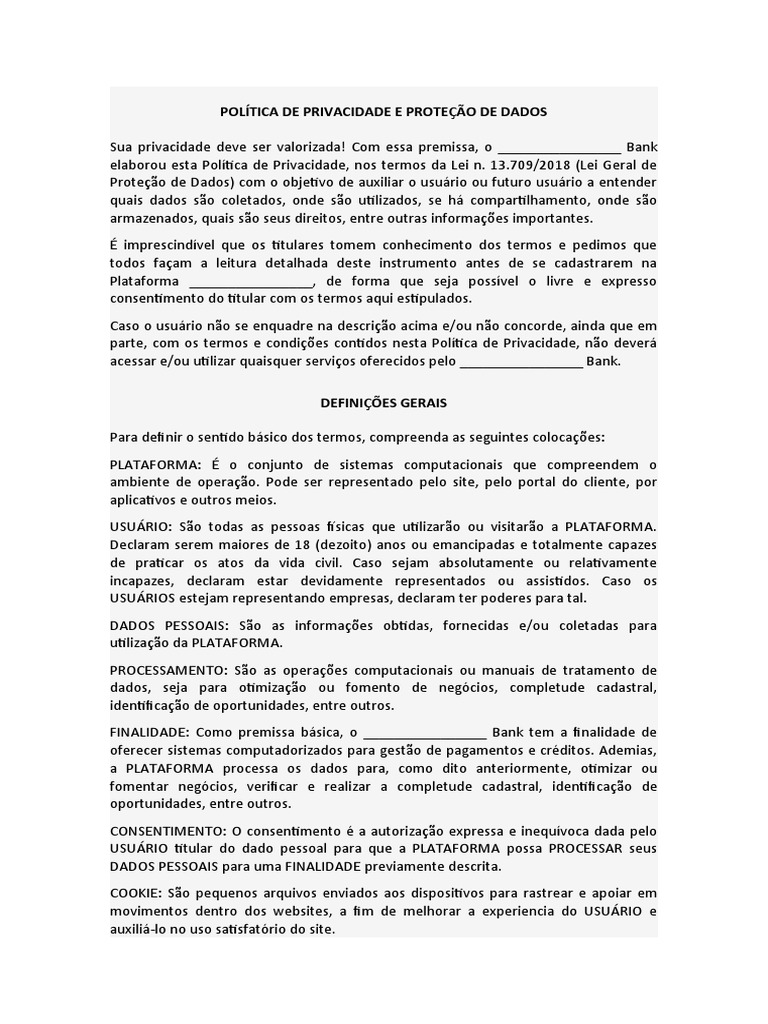
In an age where information is the currency of the digital realm, the Política de Privacidade stands as the guardian of personal data, much like a fortress holds back intruders seeking to breach its walls. This essential document delineates the protocols and practices regarding the collection, use, and dissemination of personal information, serving as both a shield and a compass in navigating the waters of privacy. By dissecting the intricacies of a Política de Privacidade, we unveil the layers that enshroud our digital interactions and safeguard our identities.
The Foundation of Trust
At its core, the Política de Privacidade acts as a covenant between individuals and organizations. It evokes an intimate trust, a promise made—akin to the way a lighthouse illuminates the rocky shores for ship navigators under the cloak of night. Organizations that adhere to transparent privacy policies cultivate an environment of trust, reassuring users that their information is treated with utmost care and reverence.
Types of Information Collected
Delving deeper, we find that not all data is created equal. The Política de Privacidade meticulously categorizes the types of information collected, which can be broadly divided into two categories: Personally Identifiable Information (PII) and Non-Personally Identifiable Information (Non-PII). The former, akin to an individual’s fingerprint, can be directly connected to a person, encompassing names, addresses, and social security numbers. In contrast, Non-PII is more nebulous—aggregated data stripped of personal identifiers, akin to clouds of vapor that float about without a name.
Methods of Data Collection
Organizations employ various methods to garner this information. Through cookies, web beacons, and tracking technologies, they embed tiny breadcrumbs across the e-landscape. Each click, each scroll, serves as a testament to the user’s behaviors and preferences. However, much like a magician who offers wonders but conceals tricks, users often remain oblivious to the methods in place, underscoring the need for a well-articulated Política de Privacidade.
Utilization of Data
Once data is harvested, its utilization can transform it into a double-edged sword. On one side, businesses can analyze data to enhance customer experience, drawing insights that inspire innovation, tailored services, and targeted marketing strategies. Visualize this as a skilled artisan crafting a bespoke piece, where the raw material of data is meticulously shaped into a masterpiece. Yet, on the other side, the misuse of information can lead to catastrophic ramifications, such as identity theft and unauthorized sharing, amplifying the urgency for transparent practices.
Data Sharing and Third-Parties
As data journeys through the digital ether, it often encounters third-party partners. The Política de Privacidade must elucidate these relationships, akin to a road map charting paths of collaboration. This aspect is particularly vital; users must discern how their information may be shared with affiliates or advertisers. This revelation acts as a protective lens through which consumers can better evaluate their willingness to engage with a service.
User Rights and Control
With great power comes great responsibility. The Política de Privacidade should empower users by clearly delineating their rights regarding personal information. Users are granted the ability to access, correct, or delete their data. This empowerment can be likened to bestowing the keys of a mighty castle upon its inhabitants, allowing them to wander freely and take refuge wherever they wish. Such rights fortify users against the travails of data misuse and grant them agency in their digital interactions.
Security Measures
As the specter of data breaches looms ominously over the digital landscape, organizations are compelled to fortify their defenses. A rigorous Política de Privacidade articulates the security measures employed to protect sensitive data, conveying a sense of reliability akin to a robust lock guarding a grand estate. Encryption, firewalls, and regular security audits are integral facets of this protective fortress. However, as history has shown, no system is impervious, making it imperative for organizations to foster a culture of vigilance and resilience against potential threats.
Updates and Amendments
In a world of perpetual change, the Política de Privacidade itself is not immune to evolution. Just as living organisms adapt to their surroundings, privacy policies must be reviewed and updated periodically to reflect any shifts in regulation or practices. Users should be made aware of significant amendments, thereby ensuring that trust is not merely an ephemeral construct but a steadfast foundation built on transparency.
The Role of Regulatory Frameworks
Furthermore, various regulatory frameworks—such as the General Data Protection Regulation (GDPR) and the California Consumer Privacy Act (CCPA)—serve as guiding stars for organizations, fostering an environment of compliance and accountability. These regulations, like a judicious curator of a priceless exhibit, enforce standards ensuring the ethical handling of personal data, demanding organizations to uphold the sanctity of privacy.
Conclusion: The Continuum of Privacy
In essence, the Política de Privacidade encapsulates the delicate interplay between personal data protection and the expansive vista of digital innovation. It stands as a testament to an organization’s commitment to ethical practices, echoing the importance of respect, transparency, and user empowerment. As we traverse the ever-evolving landscape of digital interaction, let us remain vigilant, appreciative of the sanctity of our privacy, and informed custodians of our digital identities.