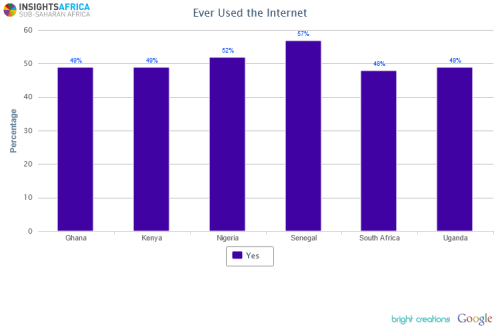
In the vast and ever-evolving landscape of the digital world, Africa emerges not merely as a continent, but as a colossal tapestry woven together by the invisible threads of the internet. The statistics surrounding internet usage in Africa reveal an intricate narrative—a story of rapid transformation, emerging opportunities, and, quite significantly, no unexpected revelations. Just as a seasoned traveler interprets the faint outlines of a distant mountain range, so too can observers decipher the underlying patterns and trends that define Africa’s internet usage.
As the internet becomes an integral part of daily life, African nations are finding themselves at the intersection of technology and tradition. The continent’s digital evolution manifests through various lenses, encapsulating both the burgeoning youth demographic and the challenges that accompany technological progression. The familiar refrain of growth rings true throughout the region; however, what stands out are the subtle nuances that characterize internet usage across different countries.
Firstly, when we examine the demographic framework, it is evident that the younger population in Africa is akin to vibrant saplings in an expansive forest, poised to flourish in an environment ripe for innovation. Over 60% of Africa’s population is aged under 25, a statistic that serves as a fertile ground for the proliferation of internet usage. This generation, often referred to as digital natives, naturally gravitates towards online ecosystems. Their interactions with technology exhibit a fervor that contrasts sharply with the slower-paced adoption seen in some Western regions.
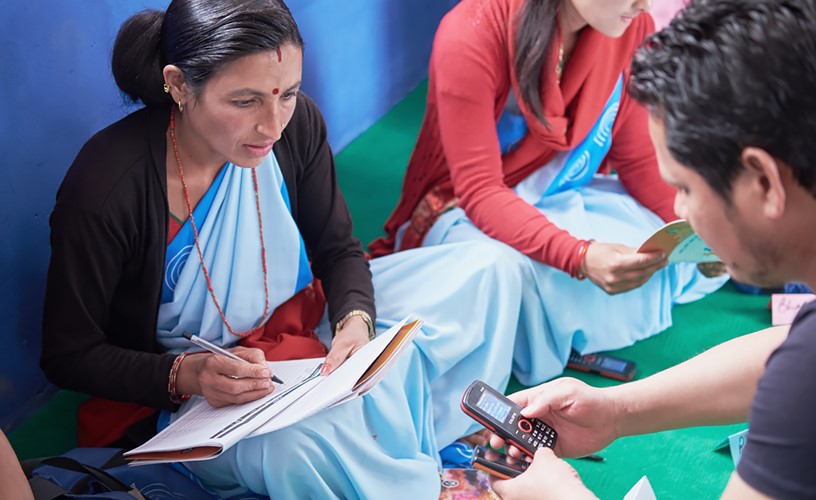
The rise of mobile connectivity has been particularly momentous, acting as a catalyst for internet access. As if witnessing the ascent of a phoenix, mobile phone penetration in Africa has skyrocketed. The continent, rich in entrepreneurship but often limited by infrastructure, has witnessed mobile technology emerge as the primary conduit for digital entry. In many instances, access to the web through smartphones substitutes for traditional broadband, enabling vast swaths of the population to engage with the global digital arena from the palm of their hand.
Social media platforms have taken center stage in this digital opera. They are not mere applications; they serve as digital arenas—pulsating hubs that allow for the exchange of ideas, cultural expressions, and commerce. Social media usage has burgeoned, with platforms such as Facebook, WhatsApp, and Instagram dominating the landscape. These platforms are akin to vibrant marketplaces where users can barter not only information but also emotional connectivity and communal experiences. The ease of sharing local narratives has given individuals a voice, transforming passive consumers into active participants in the digital conversation.
While sifting through these statistics, one cannot overlook the burgeoning e-commerce sector, which mirrors the intricate dance of a sprightly gazelle seeking sustenance in a vast savanna. As logistical frameworks improve and payment systems mature, online shopping has become increasingly viable. The landscape is dotted with local startups making strides in addressing regional challenges, creating a symbiotic relationship between technology and market demand. The visibility of Africans in the global digital marketplace emphasizes resilience and innovation, traits that are inherently intertwined with the continent’s spirit.
Yet, even amidst this whirlwind of progress, stark digital divides remain, presenting challenges that are as palpable as the soaring cliffs that await intrepid climbers. Urban-rural disparities in internet access epitomize this divide. While cities buzz with high-speed connectivity and trends flourish, rural areas often languish in the shadows. Initiatives aimed at bolstering infrastructure are crucial to bridging this gap, ensuring that opportunities afforded by the internet aren’t just a luxury for the few but a right for all. This is where the potential for collaborative effort and investment shines brightly, promising to unite the fragmented landscape into a cohesive digital society.
Moreover, the interplay between regulatory frameworks and technological advancement emerges as a significant theme. The governance of internet usage in Africa can behave like an unpredictable weather pattern; at times clear and conducive, and at others, stormy and obstructive. Policies affecting internet access, data privacy, and content regulation have the power to either stimulate growth or curtail it. As companies and governments grapple with these intricate regulations, the challenge lies in sculpting environments that nurture innovation while safeguarding rights.
Education also acts as a foundation stone that supports the burgeoning digital landscape. The correlation between internet usage and educational attainment cannot be overlooked; as individuals seek knowledge, they gravitate towards online resources. Cyber cafes, community workshops, and school programs that integrate technology into their curriculum serve as the nourishing rain that sustains the growth of a digital literacy initiative. In this way, education becomes both a tool and a weapon, elevating societies and embedding the value of curiosity deeply within the cultural fabric.
Reflecting upon the statistics, it becomes abundantly clear that Africa’s journey through the labyrinth of internet adoption is both a remarkable and predictable saga—like a well-anticipated storyline in an epic novel. The nuances and specifics present no jaw-dropping surprises, yet they paint a vivid and intricate picture of a continent poised on the brink of an unparalleled digital leap. Understanding these dynamics is crucial for stakeholders—entrepreneurs, policymakers, and citizens alike—as they navigate this vibrant milieu.
In conclusion, the African internet usage statistics reveal a continent at once familiar and unique, where the old traditions intertwine with the digital future. While the trajectory may hold no surprises, it is a narrative ripe with potential—poised for innovation, growth, and the promise of a connected society where every individual, from the bustling cities to the serene countryside, has a role to play. This intricate tapestry is not just a reflection of current realities—it’s a canvas for the future, waiting to be painted by the eager hands of its next generations.