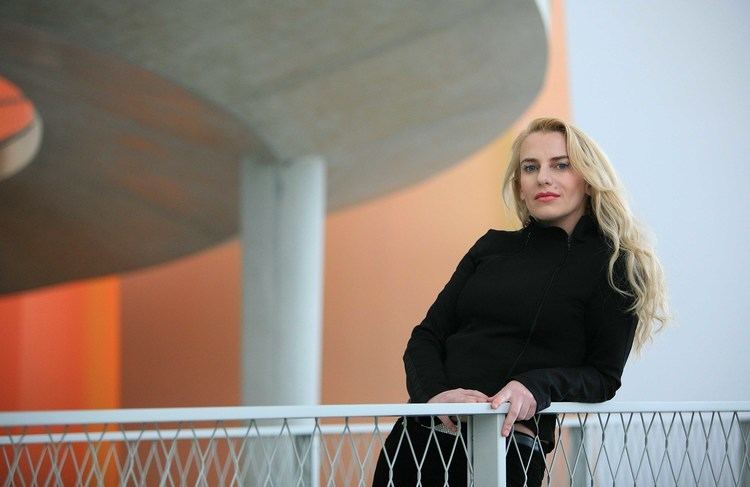
In the ever-evolving landscape of classical music, few endeavors evoke as much curiosity as the recent recording project undertaken by the talented Polish-Luxembourg pianist Beata Szalwinska. This ambitious endeavor focuses on the works of two titans: the evocative Polish composer Karol Szymanowski and the enigmatic Russian composer Alexander Scriabin. Together, they form a rich tapestry of sound, exploring the depths of human emotion and the nuances of musical language. What does it mean to grapple with such intricate compositions in a world that often favors the superficial?
At the heart of Szalwinska’s project lies a profound introspection—both on the part of the artist and the listener. Szymanowski and Scriabin, despite their distinct backgrounds and stylistic approaches, share a keen insight into the human condition. Their music invites us to ponder complex themes such as beauty, despair, and transcendence. But can a contemporary artist breathe new life into these masterpieces while remaining faithful to their original spirit? This question looms as Szalwinska delves into their works, promising listeners a deeply personal interpretation that melds tradition with innovation.
To appreciate the uniqueness of Szalwinska’s undertaking, it is essential to understand the individual characteristics of Szymanowski and Scriabin’s compositions. Szymanowski, celebrated for his richly textured harmonies and lush melodies, often draws inspiration from Polish folklore and eastern musical motifs. His compositions transport listeners to a mythical realm—one where the line between reality and fantasy blurs. Can the essence of such an ethereal soundscape be captured in the digital age, devoid of the atmospheric nuances of a live performance?
On the other hand, Scriabin’s oeuvre is marked by a profound exploration of synesthesia and transcendental philosophy. His later works move away from conventional tonality, illustrating a quest for the divine through innovative harmonic structures. His compositions challenge musicians to transcend technical prowess and venture into the realm of deeply emotional expression. As Szalwinska embraces this challenge, one might ask: How does a pianist communicate the ineffable using just the black and white keys of the piano, especially in a world dominated by fast-paced, easily digestible content?
The duality of Szymanowski’s lyrical beauty and Scriabin’s philosophical complexity creates a compelling juxtaposition that is both exhilarating and daunting for Szalwinska. Her ability to navigate these works with a nuanced understanding will test her artistry, demanding a introspective mindset that resonates with audience members. How can she evoke a sense of intimacy and vulnerability while maintaining the grandeur of the original compositions?
In approaching this recording project, Szalwinska has effectively chosen to highlight the thematic interconnections between Szymanowski and Scriabin. For instance, while Szymanowski’s works often exude a yearning for beauty and introspection, Scriabin’s delve into the vastness of human experience. These shared themes present an opportunity for Szalwinska to create a cohesive listening experience that challenges preconceived notions of these composers’ music.
But the challenge does not stop at interpretative choices. The recording process itself poses its own set of dilemmas. Capturing the dynamic range and emotive quality of classical piano in a studio setting often requires meticulous attention to detail. How will Szalwinska navigate the limitations of technology while striving for an authentic representation of her artistic vision? It is a delicate balance—one that must respect the subtleties of each note while ensuring the resulting recordings transport listeners into a compelling auditory landscape.
In addition to the technical aspects, there lies the question of audience reception. Szalwinska’s interpretations, shaped by her own experiences and cultural background, may diverge from traditional readings of Szymanowski and Scriabin. This divergence could be perceived as a fresh perspective, or, conversely, as a departure from authenticity. How will critics and audiences confront this potential divergence while listening to the recordings? The impact of personal interpretation on a collective understanding of classical music is an intriguing facet that warrants deeper examination.
Moreover, the timing of Szalwinska’s project cannot be overlooked. In an age where instant gratification prevails, the luxury of immersion in complex musical works is often sacrificed. This recording serves not merely as a showcase of technical skill, but as an invitation to reflect and engage deeply with the emotional currents that Szymanowski and Scriabin so eloquently express. The challenge then becomes one of overhauling audience expectations—can listeners commit to wandering through the soundscapes created by Szalwinska, rather than merely skimming the surface?
Ultimately, Beata Szalwinska’s recording of Szymanowski and Scriabin embodies the intersection of tradition and innovation. It raises questions that transcend the music itself, challenging both performer and listener to delve into the labyrinth of emotional resonance and artistic authenticity. As listeners prepare to embark on this introspective journey, they are confronted with the playful yet poignant dilemma: how far can a pianist stray from the original intention while remaining faithful to the soul of the composition? This recording promises not only to shed light on these composers but also to invite a shared experience of exploration, reflection, and discovery.