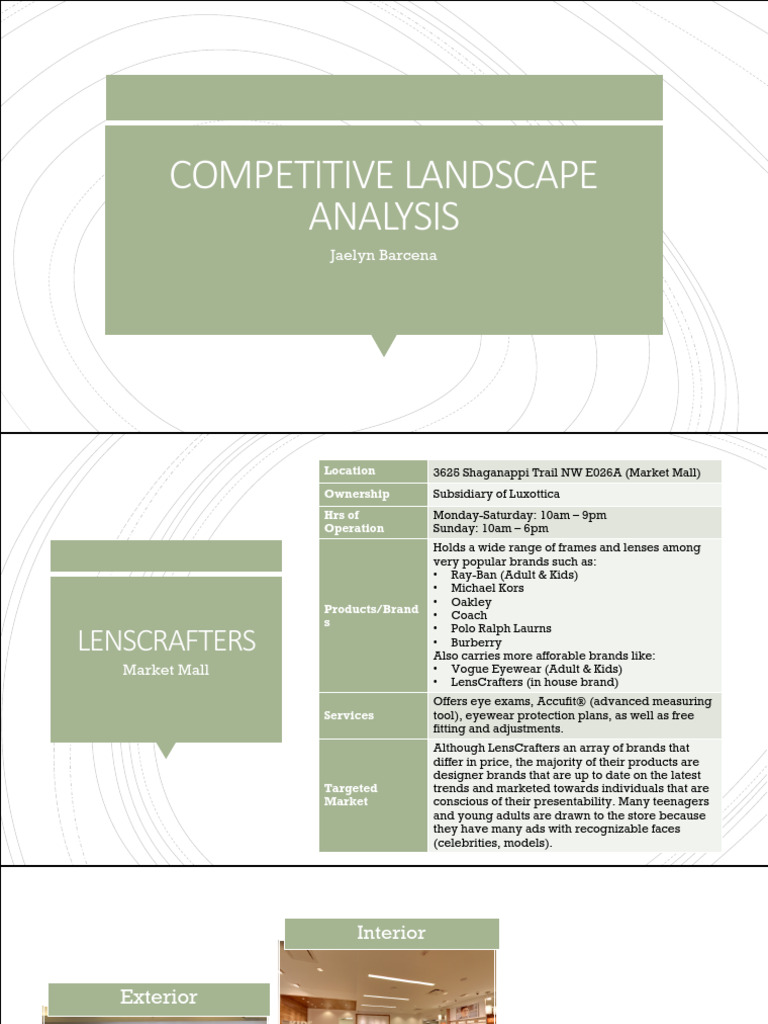
In the dynamic world of business, understanding the competitive landscape is akin to peering into a crystal ball, offering insights into the future of an industry, potential opportunities, and unforeseen threats. A thorough competitive landscape analysis enables businesses to strategically position themselves, preventing stagnation and fostering innovation. In this exploration, we delve deeply into the intricacies of competitive landscape analysis, illuminating its importance, methodologies, and the transformative perspectives it can offer.
First, let’s explore what constitutes a competitive landscape analysis. At its core, this process involves identifying and evaluating the key competitors within an industry. It encompasses various elements, including market share, the strengths and weaknesses of competitors, their pricing strategies, product offerings, and customer engagement tactics. This multifaceted scrutiny not only aids in gauging the competitive intensity but also highlights the nuances that differentiate one player from another.
One pivotal aspect to consider is the significance of understanding market boundaries. Industries are not monolithic; they are often composed of various segments and sub-segments that can cater to different customer needs. Thus, delineating the contours of the market is crucial. The interstitial spaces where companies overlap can be the breeding grounds for innovation and disruption. Companies that grasp these boundaries can identify untapped niches, forging pathways that incumbent competitors may overlook. This stratagem fosters a unique competitive advantage, allowing businesses to thrive where others falter.
Another essential component of competitive landscape analysis is the assessment of competitor strategies. Each competitor typically possesses distinct strategic orientations. For instance, one may focus on cost leadership, garnering market share through lower pricing, while another might pursue a differentiation strategy, striving to offer unique features that command premium pricing. Understanding these strategies aids businesses in determining their own positioning—whether to adopt a similar strategy or carve a new niche that disrupts the status quo.
Furthermore, a thorough competitive analysis must consider the role of technological advancements. In today’s digital age, technology operates as a double-edged sword—enhancing operational efficiencies while simultaneously leveling the playing field. Disruptive technologies can obliterate traditional market structures, prompting competitors to pivot swiftly or risk obsolescence. Therefore, businesses must remain vigilant, continuously monitoring emerging technologies that can reshape their competitive landscape.
Additionally, one must not underestimate the importance of customer insights in competitive analysis. Understanding consumer preferences and behaviors provides a contextual backdrop against which competitors operate. Engaging directly with customers through surveys, social media, and feedback can unveil patterns that influence purchasing decisions. By leveraging this information, businesses can align their offerings more closely with customer needs, fostering loyalty in an often fickle market environment.
To dive deeper into the methodologies employed in competitive landscape analysis, let us examine tools and frameworks that can facilitate this endeavor. The SWOT analysis—an acronym for Strengths, Weaknesses, Opportunities, and Threats—serves as a foundational model. By mapping out these four quadrants for each major competitor, businesses can visualize the competitive terrain more clearly. This synthesis of information empowers stakeholders to make informed decisions regarding resource allocation and strategic focus.
Moreover, market mapping is another invaluable technique. This multidimensional approach allows businesses to visualize the market landscape in terms of product features, pricing, and market position. By plotting competitors in a two-dimensional space, organizations can identify gaps in the market—a space where they can potentially innovate or introduce new products that meet unaddressed consumer demands.
As we traverse the landscape of competitive analysis, one cannot ignore the influence of external factors. The PESTLE analysis—encompassing Political, Economic, Social, Technological, Legal, and Environmental factors—offers a comprehensive view of the macro-environment that can shape competitive dynamics. Changes in regulation, economic fluctuations, or societal shifts can all aspiringly shift competitive paradigms overnight.
In contemplating future trends, harnessing the potential of big data and analytics becomes an imperative. Organizations are increasingly turning to data analytics tools that can process vast quantities of information at breakneck speeds. These tools help decode consumer behaviors in real time, allowing businesses to anticipate shifts in the market with greater accuracy. Engaging in predictive analytics not only aids in understanding the competition but also in forecasted responses to market changes.
Moreover, a shift towards a more collaborative approach among competitors—often termed “co-opetition”—is emerging. In certain industries, competitors may recognize the mutual benefits of collaboration for innovation or addressing regulatory challenges. This paradigm shift emphasizes a collective mindset that can lead to unique strategic partnerships, pooling resources for a common goal, ultimately driving industry advancement.
In conclusion, conducting a thorough competitive landscape analysis is no longer a luxury but a necessity for any business aiming to thrive. By embracing a comprehensive and nuanced approach that integrates multiple methodologies, organizations can equip themselves with the insights needed to navigate an ever-evolving market. The power of competitive analysis lies not just in understanding existing competitors but in fostering a mindset that anticipates change, encourages innovation, and ultimately paves the way for sustainable growth. It is a promise of transformation, one that urges businesses to reframe their perspectives and seize the myriad opportunities that lie within the competitive fray.