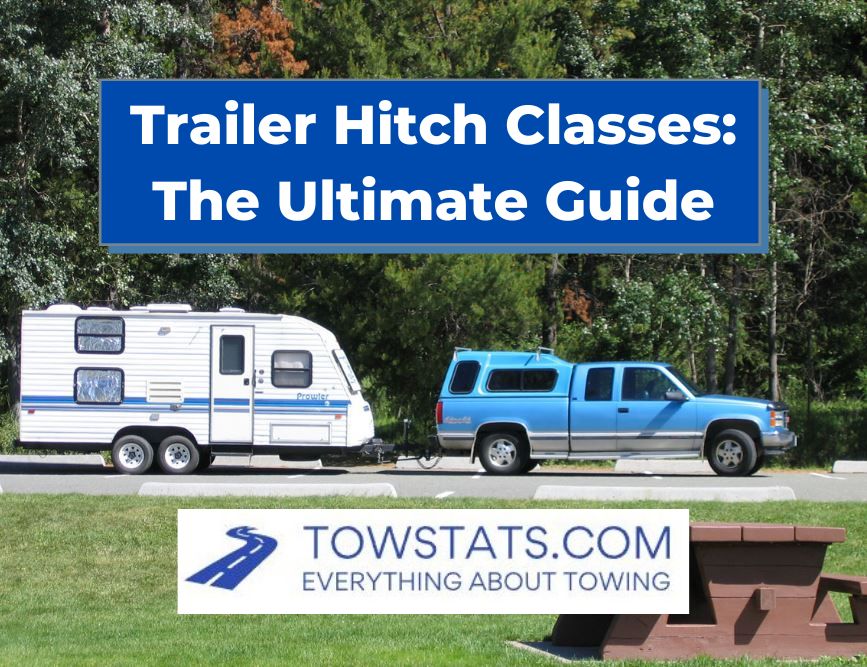
The world of trailer hitches is a nuanced landscape that can profoundly impact your towing experience. Whether you’re a weekend warrior or a seasoned professional, understanding the differences in trailer hitch classes can radically enhance your perspective and capabilities. Each class symbolizes unique specifications suited for various applications, so let’s embark on this enlightening expedition through the intricacies of trailer hitch classes.
Trailer hitches are generally categorized into five main classes, each reflecting distinct weight capacities and design attributes. This classification helps consumers not only select the right hitch for their needs but also ensures safe and efficient towing.
Class I: The Lightweight Innovator
Class I hitches are the simplest of the family, typically rated for a Gross Trailer Weight (GTW) of up to 2,000 pounds and a maximum tongue weight of 200 pounds. These hitches are perfect for lightweight trailers, such as small boats or utility trailers. Designed for compact cars or crossovers, Class I hitches feature a 1.25-inch receiver, which instantly makes them more compatible with lighter towing requirements.
While they may lack the muscle of their larger counterparts, Class I hitches serve a vital role in the transport of modest loads. The elegance of simplicity often leads to underappreciation, but for those who need to tow an occasional small trailer, this class opens the door to access the towing world without overwhelming complexity.
Class II: The Versatile All-Rounder
Increasing in strength, Class II hitches can handle loads from 2,000 to 3,500 pounds GTW and possess a tongue weight capacity of up to 300 pounds. This hitch class employs a 1.25-inch receiver as well, yet it is engineered to support more robust applications. Ideal for moderate needs, these hitches provide a bridge for those who require a bit more heft in their towing endeavors.
Class II hitches find their niche among enthusiasts who transport heavier motorcycles, campers, and utility trailers. Their versatility empowers users to tackle a variety of activities, from leisurely weekend trips to essential work tasks. The balanced design of Class II hitches provides a scaffold for exploration and adventure, marking a powered step into a multifaceted world.
Class III: The Powerful Workhorse
As we traverse deeper, we encounter Class III hitches, which can accommodate GTW ratings of up to 8,000 pounds and tongue weights of 800 pounds. Characterized by their robust 2-inch receiver, these hitches cater to more demanding applications, often utilized for hauling large boats, trailers, or livestock. Class III hitches are quintessential for truck enthusiasts and those engaged in heavier-duty tasks.
The broad applicability of Class III hitches grants users the freedom to embrace daring projects while maintaining safety and reliability. Whether transporting a trailer full of gear for a camping expedition or moving significant loads for work, this hitch class showcases a formidable blend of strength, versatility, and dependability, allowing freedom in the choices surrounding work and leisure.
Class IV: The Heavy-Duty Champion
In the domain of heavy towing, Class IV hitches reign supreme. Ranging from 10,000 to 12,000 pounds GTW and boasting tongue weights of up to 1,200 pounds, these hitches are explicitly designed for substantial, rigorous tasks. The 2-inch receiver attachment underscores their heavy-duty capability.
Class IV hitches are indispensable for those who tow large caravans, substantial construction equipment, or even sizable trailers filled with machinery. Their architecture reflects durability, often integrating reinforced steel and advanced techniques to withstand extreme conditions and stresses. The ability of Class IV hitches to tackle formidable loads and the steadfast safety they offer instills confidence in users seeking to push the boundaries of their hauling capabilities.
Class V: The Ultimate Maestro of Towing
For the apex of trailer hitches, Class V emerges. Carrying an astonishing capacity ranging from 12,000 to 20,000 pounds GTW and supporting tongue weights of up to 2,400 pounds, this class is the titan of towing capabilities. As the most robust option, Class V hitches feature heavy-duty 2-inch components, designed for rigorous application—think of transportation involving large trailers, construction equipment, or even commercial vehicular solutions.
The machinery and engineering behind Class V hitches reflect a commitment to safety and resilience, capturing the essence of professional-grade towing. For business owners, construction workers, or serious outdoor adventurers, Class V hitches provide unparalleled reliability when it matters most, relinquishing concerns for fear of inadequate equipment.
Choosing the Right Hitch Class
Deciphering the ideal hitch class hinges on several factors: the weight of the load, the type of vehicle used, and the frequency of towing. Grasping the importance of matching the right hitch to the right application is crucial for effective towing. Each class has unique attributes tailored to specific needs, making informed decision-making essential.
Each class of trailer hitch intricately weaves its narrative into the larger tapestry of towing, showcasing how specialized engineering meets practical demands. Selecting the appropriate hitch class is not merely a matter of functionality; it symbolizes a commitment to safety and efficacy in transportation. As you chart your course through the myriad options available, allow this newfound understanding of trailer hitch classes to guide your journey—the right approach can transform mundane transportation into thrilling adventures. Embrace the possibilities that lie ahead.